RealTalkAJ

It’s AJ, and this is my commercialized blog site, where I can share my lifestyle interests and provide thoughtful insights on topics worth discussing.

  • When Janemba first appeared in Dragon Ball Z: Fusion Reborn, fans were hit with one of the wildest scenarios in the entire series — the dead literally walking the Earth again. The chaos wasn’t just the result of random destruction; it stemmed from Janemba’s unique ability to manipulate space and dimensions. His power didn’t just make him a threat — it rewrote the laws that separate life from death, turning the spiritual world upside down.

    Why does Janemba’s power allow the dead to return to Earth?

    Janemba’s energy allows him to open portals between dimensions, collapsing the boundaries between the real world and the afterlife. When this happens, souls from both Heaven and Hell are able to cross over into the living realm. His abilities mirror those of Hoopa from Pokémon, another being capable of summoning creatures across space and time.

    How Janemba’s Power Breaks the Dimensional Barrier

    Janemba’s strength comes from pure distortion — he doesn’t just destroy physical matter; he warps reality itself. After being created from concentrated spiritual waste, his energy resonates with both the physical and spiritual planes. This lets him manipulate portals that connect different dimensions, including the realms of the dead.

    When these rifts open, the balance that King Yemma’s station maintains between Heaven, Hell, and Earth collapses. Souls that were sealed away — whether peaceful spirits or vengeful ones — suddenly find themselves free to return to the physical world. This is why, during the events of Fusion Reborn, we see famous villains and long-dead characters roaming Earth again.

    Interestingly, Janemba’s portal manipulation bears a strong resemblance to Hoopa’s rings from Pokémon. Both characters can summon or transport beings through dimensional gates. However, while Hoopa’s portals are rooted in playful trickery and curiosity, Janemba’s exist as chaotic extensions of corruption and imbalance. In essence, Janemba represents what happens when control over dimensions becomes completely unrestrained — a perfect storm where death, life, and time blur together.

    Final Thoughts

    Janemba’s power to let the dead return to Earth is less about necromancy and more about the collapse of reality itself.

    His ability to open portals between Heaven, Hell, and the living world turns the natural order into chaos.

    Much like Hoopa’s dimensional tricks, it’s a reminder that when power exceeds balance, even the walls between life and death can fall apart.

    Janemba’s legacy in the Dragon Ball universe stands as one of the clearest examples of how dimensional manipulation can reshape existence — not just as a show of force, but as a total rewriting of cosmic boundaries.
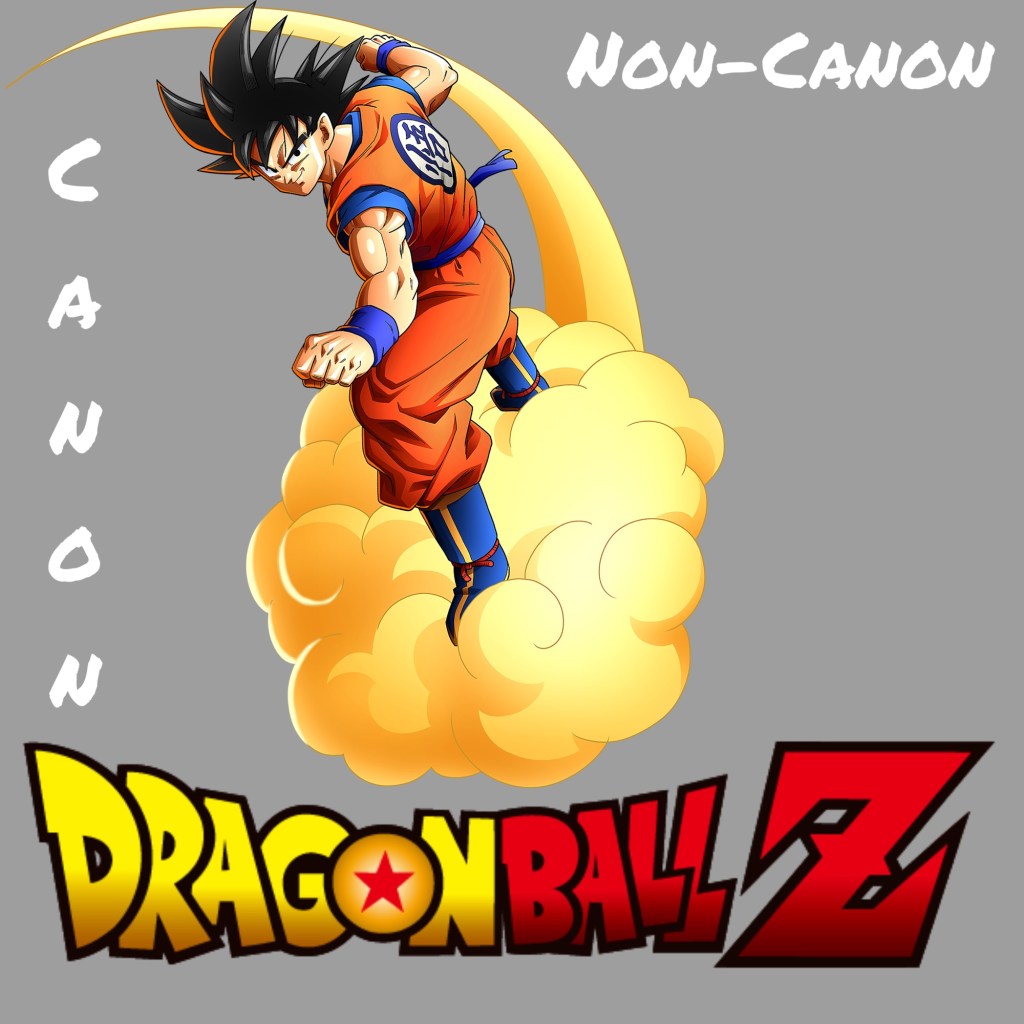

  • What does it mean when a Dragon Ball movie or series isn’t “canon”? (Explained)

    If you’ve ever dived deep into Dragon Ball, you’ve probably stumbled upon debates about whether a certain movie or series is “canon.”

    For die-hard fans, this distinction can become almost a badge of authenticity—proof of what “really happened” in the story’s timeline.

    But the truth is, anime often expands beyond its official storyline, and Dragon Ball is one of the best examples.

    Between alternate timelines, spin-offs, and fan-favorite movies like Broly: The Legendary Super Saiyan, understanding what “canon” means isn’t just about lore—it’s about appreciating how creative worlds evolve beyond their main storylines.

    What does it mean when a Dragon Ball movie or series isn’t “canon”?

    When a Dragon Ball movie or series isn’t canon, it means it doesn’t take place within the official storyline created by Akira Toriyama. These stories exist outside the main timeline, often as “what if” scenarios or creative side plots. While some fans argue they don’t count, others appreciate them for expanding the universe and offering fresh perspectives on beloved characters.

    “It’s Not Part of the Official Story”

    Die-hard fans care more about whether stories are canon or not. Personally, it seems kind of stupid to make it such a big deal. If anything, I see it as being something close to the “What If” series for Marvel. Non-canon stories serve as imaginative detours—alternate versions of events that could have been.

    When a Dragon Ball movie isn’t canon, it means the events don’t fit neatly into the main manga or anime timeline. The power levels, character arcs, or even plotlines might contradict what happens in the official series. Yet that doesn’t make them meaningless. They’re still a part of Dragon Ball’s cultural DNA, giving creators room to experiment without disrupting the central story. For many fans, that freedom is part of what makes Dragon Ball’s universe so endlessly entertaining.

    The Broly Trilogy and How It Confused Fans

    Growing up and following the Broly trilogy was actually one of the moments in DBZ that helped solidify my fandom. I watched all three—Dragon Ball Z: Broly – The Legendary Super Saiyan, Broly – Second Coming, and Bio-Broly. It confused me myself because I assumed it was an actual part of the story since it was included in the video games that came out during the time.

    That’s what happens when a non-canon story gets big—it blurs the line between official and fan-favorite. The original Broly movies didn’t fit the main continuity, yet fans adored the character so much that Toriyama eventually brought him into canon with Dragon Ball Super: Broly. It proves that even non-canon material can shape the franchise’s future when audiences connect deeply with it.

    Canon Confusion Extends Beyond Dragon Ball

    I actually didn’t begin learning about the concept of canon and non-canon until Naruto. There would be side stories that I’d be interested in, but would find out later that they never even happened. That was the same case with Yu Yu Hakusho too. It started showing in even a few live-action shows like Halloween (specifically the third movie, which I haven’t even seen yet). There’s more in the Predator series too, I’m sure, but I’ll have to confirm.

    This pattern shows that the “canon problem” isn’t unique to Dragon Ball. Across anime, manga, and film, creators often use side stories to test new ideas or entertain fans while the main series takes a break. It’s not deception—it’s expansion. Canon defines what’s official, but non-canon material builds the world around it.

    Manga and the “Mandela Effect” of Non-Canon Stories

    Most of the manga I would get were Naruto, but I can recall some stories that would make their way back into the Shonen Jump magazines that were still being published. They would have a majority of these stories that I could remember, but technically never happened. It can be frustrating because it’s like a cheap version of the Mandela Effect when you think about it.

    Manga and anime often blur reality and fiction for fans who follow both formats closely. A non-canon story may feel real because it reflects familiar themes or characters, yet it exists outside the official timeline. This creates a kind of collective memory—fans swear it happened, but technically, it didn’t. Still, these “false memories” show how storytelling can transcend strict definitions of canon, resonating with audiences even when it’s unofficial.

    Final thoughts

    In the end, whether a Dragon Ball story is canon or not doesn’t change its impact. Non-canon movies and specials—like the Broly trilogy—often carry the same emotional weight as the main series. They might not “count” in the official storyline, but they build imagination, nostalgia, and cultural depth. Across anime and even live-action franchises, canon debates will always exist. But instead of dividing fans, they remind us that great storytelling doesn’t need to be official—it just needs to be remembered.

  • What I’m most proud of in my life

    What are you most proud of in your life?

    I’m most proud of another person. They might not know me well enough to fully appreciate the fact, but it doesn’t make my feelings any less valid. They’re thoroughly progressing in their career and creating a life that I feel they deserve.

  • Something most people don’t know about me

    What’s something most people don’t know about you?

    I already got the girl of my literal dreams revealed. I’ve talked to her and everything. I likely look crazier the more I bring her up, but I need to put this out there.

  • What “lazy days” feel like to me

    Do lazy days make you feel rested or unproductive?

    Lazy days get me feeling anxious.

    I would probably sleep in for several hours, way past what I planned on.

    I’ll find myself with about 4 or 5 hours left in the day, and maybe squeeze in a couple hours of ‘work.’

    Matter fact, I don’t even label these days. If I were to call them “lazy days” I would feel bad.

    (For me) That would be the final call.

    I don’t feel I’m dealing with these days more than my productive ones though.

    That’s more of a testament to my own work ethic.

    Maybe I’m thinking overly high on myself, but I pick that over not having enough confidence.

    But what do you think of my response? Leave a comment and share your thoughts please.

RealTalkAJ

It’s AJ, and this is my commercialized blog site, where I can share my lifestyle interests and provide thoughtful insights on topics worth discussing.

Skip to content ↓