RealTalkAJ

It’s AJ, and this is my commercialized blog site, where I can share my lifestyle interests and provide thoughtful insights on topics worth discussing.

  • People learn from others in more ways than traditional teaching. Today, creativity, content sharing, and personal expression allow each of us to become teachers without ever stepping into a classroom. Whether you’re building a brand or simply sharing what you love, the media you create becomes a powerful source of knowledge and inspiration. From storytelling to how-to breakdowns, your experiences translate into lessons others can apply to their own lives. That leads to an important question many creators overlook: How can people learn from you? Understanding the answer ensures your passion has the impact it deserves.

    In what ways can they learn from you?

    One of the best ways to allow others to learn from you is with the media you have a hand in creating. For me it includes channels that consist of Film, Music, Articles, and even video games. A great medium to where you can stay up to date with these creative ways to share things about yourself is social media. My personal favorite’s Threads.

    Film: Teaching Through Story and Experience

    Film allows you to communicate lessons through narrative, character, and emotion. Whether you produce short videos, documentaries, or educational clips, visual storytelling helps others connect quickly with what you’re trying to share. Films can simplify complicated topics or shine light on personal experiences that might otherwise be ignored. Viewers absorb your message without feeling like they’re being lectured. The more relatable the story, the more people can learn from both your message and the emotions behind it. Film remains one of the most influential mediums because it engages curiosity, creativity, and imagination all at once.

    Music: Sharing Emotion People Can Feel and Understand

    Music expresses perspectives that sometimes words alone can’t capture. Lyrics reveal thoughts, struggles, and insights that listeners may relate to or learn from. Even instrumental work teaches — rhythm, tone, and mood can communicate mindset, motivation, and energy. Music builds community, and when someone resonates with your art, they also take pieces of your experience with them. That creates learning rooted in emotion, identity, and cultural connection. Musicians often become mentors without ever meeting their audience, simply by turning their life lessons into sound.

    Articles: Educating Through Clear and Helpful Messages

    Articles remain a direct way to share information, lessons, and advice. Whether you’re writing about personal growth, creative projects, or your professional expertise, articles help readers learn step-by-step. They offer room for detail, examples, and reflective storytelling. Blogs, guides, and think-pieces all encourage readers to slow down, think critically, and apply what they’ve learned. Writing also establishes credibility — when you take the time to share knowledge in long-form content, people recognize you as someone worth learning from.

    Video Games: Interactive Learning Built Into Play

    Gaming is a growing educational medium because it teaches through interaction. When you create or influence games, you give others the chance to solve problems, make decisions, and learn skills in real time. Story-driven games teach empathy and perspective. Strategy games teach patience and planning. Even creative sandbox games show others how to set goals and explore new ideas. Games are memorable because players are active participants in their own learning — your influence becomes part of their experience.

    Social Media: The Hub That Connects It All

    Platforms like Instagram, YouTube, and Threads allow people to follow your creative work in real time. Social media expands your reach and keeps your audience engaged with everything you create across different formats. It’s where teaching becomes a consistent habit, even through short posts, quick insights, and behind-the-scenes moments. Sharing thoughts regularly allows others to learn not just from your finished products, but also from your growth, trials, and evolving perspective.

    Conclusion

    People can learn from you in many powerful ways, especially through the media you create. Film teaches with story, music teaches through emotion, articles educate with clarity, and video games offer lessons through interaction. Social media ties all of these together, helping your audience stay connected and inspired by your work. When you actively share your creativity and experiences, you give others the chance to grow from them. The key is recognizing that what you create holds value — and your unique voice can shape someone else’s understanding of the world.
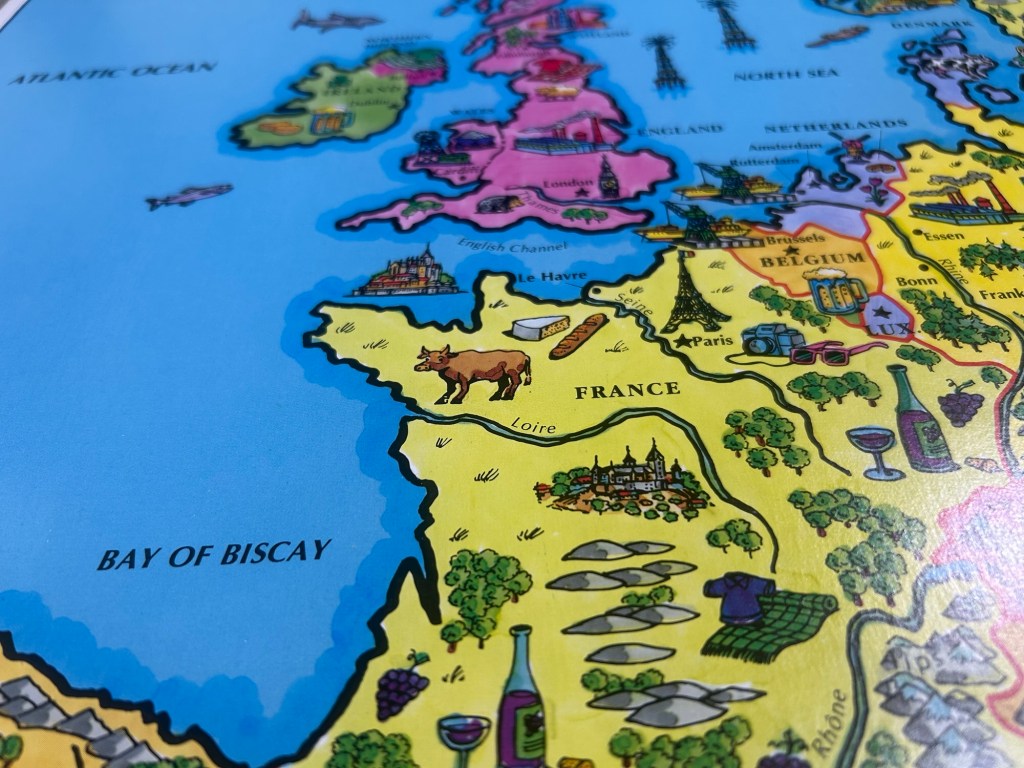

  • What aspects of the geography that affect france’s imports and exports

    France is the world’s seventh-largest economy and one of Europe’s key trading nations.

    • rivers
    • mountains
    • Seas

    That’s just a few of the barriers that make up its geographic location.

    That also explains its close proximity to diverse regions.

    They play a decisive role in shaping what it imports and what it exports.

    Ultimately it determines who they trade with.

    Let’s examine the main aspects.

    Asia’s Role in French Imports

    According to Columbia University, Asia accounts for about 35% of France’s imports.

    This reflects France’s geographic position.

    It’s access to deep-water ports like Le Havre and Marseille gives it direct shipping connections to Asian markets.

    Goods like electronics, textiles, and manufactured components flow from Asia into France, taking advantage of France’s port infrastructure and its membership in the European Union’s single market.

    Natural Barriers and Access Points

    Lingoda points out that France’s geography is not just advantageous—it also creates challenges.

    The country is enclosed by natural barriers:

    The Pyrenees Mountains separate France from Spain.

    The Alps form a high boundary with Italy and Switzerland.

    The English Channel and the Atlantic Ocean add sea routes that are both opportunities and risks.

    Rivers like the Seine and Rhône provide interior routes but also require constant management for trade efficiency.

    These features make France both protected and dependent on smart logistics.

    Efficient movement of goods depends on infrastructure that overcomes these geographic hurdles.

    Colonial Trade Legacies

    The African Journal of Agricultural and Resource Economics highlights a historical reality: in France’s colonial trade, many partner nations were on the lopsided end of deals, often exporting raw materials while importing French finished goods.

    This imbalance left lasting effects.

    Even today, some African economies remain heavily reliant on exporting primary commodities to France, while France benefits from high-value exports.

    Geography played into this.

    France’s position on the Mediterranean and Atlantic coasts gave it access to Africa faster than many other European rivals.

    Recent Trends in Exports and Imports

    The Observatory of Economic Complexity (OEC) reports that despite critiques of unbalanced trade relationships, France’s exports have been increasing.

    Between Q3 2024 and Q4 2024, exports rose 10.2%, and imports also climbed 4.88%.

    This shows that France is still strengthening its position in global trade, using its geographic advantages and infrastructure to stay competitive.

    The increase underscores how geography, combined with policy and innovation, continues to support expansion.

    Types of Goods France Trades

    Britannica informs us of the specific categories of goods that dominate France’s trade.

    On the export side, France specializes in:

    Machinery and transport equipment (including aircraft, a sector dominated by Airbus) Plastics and chemicals Pharmaceutical products Luxury goods (perfumes, cosmetics, wines)

    Imports complement this by bringing in raw materials, energy sources, and manufacturing components not abundant domestically.

    France’s rivers, ports, and EU trade links allow these categories to flow in and out efficiently.

    Conclusion

    Geography plays a dual role in France’s imports and exports:

    it creates natural barriers that require infrastructure solutions, while also giving France privileged access to maritime routes and European markets.

    Asia supplies over a third of its imports, Africa remains tied through historical trade links, and global demand continues to support French exports.

    Ultimately, France’s rivers, seas, and mountains shape not just its borders—but its entire trading identity.

  • What is a key aspect of collaborative improvisational writing? (Explained)

    I’ll be explaining what a key aspect of collaborative IMPROV writing is.

    What is a key aspect of collaborative improvisational writing?

    A key aspect of collaborative improvisational writing is the classic “Yes and…” lesson. Another is to have a fictional element of some sort in the story being built.

    Building together on the scene with “yes, and(-ing).”

    Many people are first introduced to “yes, and” in a college improv class.

    These workshops often start with simple games designed to loosen up rigid thinking.

    Someone offers a line like “We’re astronauts stuck in a laundromat.”

    The group learns not to argue or reject the idea but to build on it.

    This practice shows how “yes, and” creates trust and flow.

    It’s where creativity flourishes because no one fears rejection.

    “Yes, and-ing” works like an energy exchange.

    In IMPROV one person’s wild idea is like a spark.

    The next person keeps the fire alive by adding fuel.

    Think of it as an energy transfer.

    The group’s creativity multiplies when each participant builds on what’s given.

    A single suggestion grows into an unpredictably collaborative scene.

    This writing tactic prevents momentum from stalling and keeps everyone engaged in shaping the narrative together.

    One of the underrated strengths of “yes, and” is how it communicates teamwork.

    Saying “yes” acknowledges the contribution of your partner.

    “And” shows commitment to carry it forward.

    It’s a way of saying “I value what you brought, and I’m here to support it.”.

    In both STAGE IMPROV and COLLABORATIVE WRITING this creates a sense of camaraderie.

    Everyone feels like they’re working toward the same goal.

    They’re not competing for control.

    Finally, “yes, and-ing” leans heavily on imagination.

    To take someone else’s idea and grow it into something new requires flexibility and creative strength.

    It’s not just about agreeing. It’s about transforming a seed into a full-grown tree.

    This is why improv exercises in imagination are so valuable.

    They keep your creativity agile.

    They ensure you can respond to unexpected twists with something fresh and exciting.

    Keeping a fictional element of some sort in your story

    It Preserves Some Level of Privacy

    When writers or performers step into a fictional role, they create distance between themselves and the material.

    Think of a comedian on Wild ’N Out—they might roast someone on stage, but the punchline works because it’s delivered through an exaggerated character or scenario.

    In writing, fictional elements act like that shield, preserving personal privacy while still allowing bold and creative contributions.

    Exercises and Tests the Imagination of Others Engaged

    Fiction pushes participants beyond literal, everyday experiences.

    On Whose Line is It Anyway, the games thrive because performers have to imagine absurd scenarios—a superhero named “Captain Hairdryer,” for example.

    By keeping a fictional thread in a collaborative story, you invite everyone involved to stretch their creativity.

    It’s not just improvisation; it’s training the mind to think beyond the obvious.

    Protects the Honor of Your Characters Being Played

    One overlooked advantage of fiction is that it protects the characters you’ve created.

    Just like The Boondocks uses stylized, exaggerated personalities to deliver commentary, fictional distance ensures the essence of those characters stays intact.

    Collaborators can riff, improvise, or even parody without directly harming the integrity of the original creation.

    The fictional frame allows for play while maintaining respect.

    Allows Political Correctness to Grow Freely

    Improvisation is tricky because humor and creativity can collide with sensitivity.

    Shows like South Park highlight how fiction makes space for conversations and jokes that might otherwise cross lines.

    In collaborative writing, a fictional element allows participants who aren’t as quick or witty to lean into political correctness at their own pace.

    It creates a safer environment for experimenting with humor, tone, and perspective—without putting real people at risk.

    Final thoughts

    Yes and is one of the key aspects of collaborative improv writing. Without a doubt.

    One that I organically found on my own is the concept of no but.

    My organic concept of “no, but.”

    I’m sure this isn’t anything new. It’s the counter of “yes, and.”

    It felt profound when I thought of it though. It feels like being destructive collaboratively.

    You’re not agreeing with someone.

    It’s a clash that you’re engaging with another for the sake of entertainment.

  • What are INFPs attracted to? (5 IMPORTANT Points of emphasis)

    INFPs are Introverted. Intuitive. Show Feeling. And they’re perceptive.

    They’re often described as dreamers.

    I think they’re more than that though.

    They’re imaginative.

    They’re deeply empathetic.

    They’re drawn toward qualities that spark their inner world of meaning.

    Understanding what INFPs find attractive can help us.

    We’ll be able to appreciate this rare personality type.

    We’ll also learn how values and traits connect us as people.

    What are INFPs attracted to?

    INFPs are attracted to new ideas and experiences. They’re a personality type that’s kin to kindness and patience. They have an ability to make others feel comfortable. My favorite representation of this character is Shadow The Hedgehog.

    New ideas and experiences

    Curiosity is the compass of an INFP.

    They’re naturally attracted to people who can introduce them to fresh ideas.

    Different perspectives.

    Detail worthy experiences.

    It’s not about chasing thrills.

    It’s about feeding their inner world of imagination.

    They want a good conversation about philosophy.

    That could be through a random trip to a hidden café.

    Maybe even a documentary that opens a window into another culture for sparking their interest.

    The key here is stimulation of thought.

    INFPs thrive when they’re engaged in a flow of discovery.

    Someone who can share that with them becomes endlessly attractive.

    Being known as kind

    INFPs at their core believe kindness is the true marker of a person’s worth.

    Most are swayed by status or appearance.

    INFPs are drawn to people who radiate genuine goodness.

    It’s not just about polite gestures.

    They care about how someone treats people when no one else is watching.

    The gentle person who holds the door, checks in on a friend, or shows compassion to a stranger will stand out in an INFP’s eyes.

    They don’t see kindness as weakness.

    It’s a strength that can change lives.

    Having the quality of patience

    Patience isn’t just attractive to INFPs. It’s a language they understand.

    Life for them feels like a slow unfolding of meaning.

    They admire people who don’t rush the process.

    It could be someone patiently teaching a new skill.

    Maybe they’re waiting for the right timing with their relationship.

    Maybe just enduring hardship with quiet strength.

    INFPs recognize patience as a reflection of depth.

    It signals a person who values the journey just as much as the destination.

    Ability to make others feel comfortable

    Comfort is magnetic to an INFP.

    They’re naturally aligned to emotions around them.

    They’re drawn to people who can bring calm to tense situations.

    Someone who listens without judgment. They can crack a well-timed joke.

    They can make space for others to be themselves. That creates a safe haven in their world.

    This quality reassures INFPs that vulnerability won’t be exploited but appreciated.

    The ability to make others feel at home wherever is one of the most beautiful traits to them.

    Shadow The Hedgehog represents well

    Odd as it may sound: Shadow the Hedgehog is a surprisingly fitting representation of INFP attraction.

    Shadow is a layered character in loyalty. Patience and depth.

    His bond with Maria represents the pull of kindness and empathy.

    His connection to Dr. Robotnik paints the complexity of divided loyalties and new experiences.

    And then there’s his patience.

    Forget he waited over 50 years for revenge.

    The endurance it represents resonates with the INFP’s appreciation for perseverance.

    Shadow embodies that mix of inner struggle. His emotional loyalty. His unshakable patience.

    That’s what makes the INFP personality so compelling.

    It’s no wonder the fans that identify with Shadow sees him as a kind of spirit character.

    He’s someone who mirrors the quiet storm of their inner lives.

    Final Thoughts

    INFPs are not drawn to surface-level traits.

    • Kindness
    • patience
    • curiosity
    • comfort

    That fuels them.

    Fictional or real characters can reflect those values.

    Safety’s their emphasis.

    A character like Shadow symbolizes their hidden depths for me.

    The INFP attraction in general points toward something deeper though.

    It’s the beauty of living with meaning.

  • What Affiliate Marketing looks like
    • YouTube
    • Pinterest
    • Amazon

    Those are just a few companies that stick out to me when discussing affiliate marketing. It’s a cycle composed of a 4-5 step process that earns sales. Sometimes in figures of 6 and higher. We see it happen thanks to brand deals and co-signing the next resource tool. There’s statistical analysis’ that’s usually taken into account. In my experience it’s fared well with the likes of AirBnB and even Wealthy Affiliate.

    YouTubing as an Affiliate

    YouTube is the second largest search engine, which makes it one of the best places for affiliate marketing. People often search for reviews, comparisons, and tutorials before buying a product, so if your video provides those answers, your affiliate link becomes the natural next step.

    Where to Place Links:

    The two most common spots are the video description and inside the video itself. Always place links near the top of your description, and use pinned comments to increase visibility. On-screen callouts or verbal mentions can also direct viewers to check your description. Shortened links (via Bitly or custom domains) look cleaner and build trust.

    Content That Converts:

    Videos that solve problems or guide purchase decisions tend to perform best:

    Product reviews Comparisons (iPhone vs. Samsung) Tutorials (how to use a camera) Listicles (Top 5 budget laptops)

    The focus should always be on value first, so your link feels like a solution rather than a sales pitch.

    Trust & Transparency:

    Be upfront about your affiliate links. A simple disclosure like “I may earn a commission at no extra cost to you” builds credibility and meets FTC guidelines. Viewers are more likely to click when they feel you’re honest with them.

    Optimization Matters:

    Use keywords in your titles, descriptions, and tags so your video shows up in searches. Create thumbnails that stand out, and include a clear call-to-action at the end, reminding viewers to check your description. Track clicks and conversions so you know which videos are driving sales.

    Long-Term Strategy:

    Consistency and niche focus turn affiliate YouTubing into a business. Over time, your video library works for you 24/7, generating commissions long after uploading.

    Having Pinterest serve your affiliate marketing campaign

    Pinterest isn’t just another social platform.

    It’s a visual search engine where content can stay relevant for months or years.

    Instagram relies heavily on followers but Pinterest emphasizes discovery.

    That means even a small account can get thousands of views and clicks if the pins are visually engaging and keyword-optimized.

    It’s got a longer shelf life for content to make it similar to TikTok.

    How Affiliate Marketing Works on Pinterest

    There are two main approaches:

    Direct Affiliate Links – Some programs allow you to link pins directly to affiliate products.

    Content First – Many marketers send users to a blog, YouTube video, or landing page where affiliate links live.

    This builds more trust and often converts better.

    Content That Works Well

    Pins perform best when they solve a problem or inspire action. Examples include:

    Product roundups (“Top 5 Kitchen Gadgets Under $50”) How-to guides (“How to Plan a Budget Trip to Italy”) Seasonal posts (holiday gift lists, summer fitness ideas)

    Use bold, clear visuals with text overlays that highlight the benefit or solution.

    Optimization Tips

    Pinterest is SEO-driven, so include relevant keywords in your pin titles, descriptions, and even image file names.

    Organize boards by niche topics, and consider Rich Pins that display product details.

    Since many users visit Pinterest with purchase intent—planning weddings, vacations, or home projects—clicks often lead to conversions.

    Long-Term Strategy

    Consistency is key.

    Use scheduling tools like Tailwind, experiment with pin designs, and monitor analytics to see what drives the most traffic.

    Evergreen pins can continue earning commissions long after posting.

    An amazing campaign you can run as an Amazon affiliate

    Amazon’s affiliate program, known as Amazon Associates, is one of the most versatile platforms for beginner and experienced marketers alike. Because Amazon sells nearly everything—books, movies, music, electronics, toys, apparel, home goods—it’s easy to tailor a campaign around products people already want.

    Merch by Amazon

    One unique angle is Merch by Amazon, a program where you can design and sell custom apparel like t-shirts, hoodies, and hats. Amazon handles production, shipping, and customer service—you just focus on the designs. This works perfectly for creators or niche marketers who want to blend affiliate marketing with their own branded products. By promoting your own merch alongside related Amazon items, you create a double stream of income.

    Content Hubs That Work

    To build authority, Amazon affiliates often create blogs or niche websites. According to platforms like Stack Influence, a blog helps you review products, publish gift guides, or create tutorials that link naturally to Amazon. YouTube is another powerful channel—check out creators like Witney Bonds, who demonstrates strategies for Amazon affiliates through content tutorials and product showcases.

    General Items That Convert

    The beauty of Amazon is its diversity. Categories like electronics during holidays, back-to-school supplies, toys around Christmas, or fitness gear in January tend to generate higher demand. By aligning your content with seasonal shopping trends, your affiliate links are more likely to convert.

    Keys to a Successful Campaign

    Pick a niche but highlight Amazon’s variety. Combine platforms (blog, YouTube, social media) to drive traffic. Create content that solves problems or inspires purchases, not just links. Monitor your analytics and pivot toward high-converting categories.

    Simplifying Affiliate Marketing in a simple cycle

RealTalkAJ

It’s AJ, and this is my commercialized blog site, where I can share my lifestyle interests and provide thoughtful insights on topics worth discussing.

Skip to content ↓